Variety: ‘Purple Rain’ at 30: Why It’s the Musical That Defined the ’80s

Introduction: When it premiered on July 27, 1984, the rock drama “Purple Rain” announced the arrival of a major movie star in Prince Rogers Nelson, a flamboyant 26-year-old musician better known by the royal mononym Prince. Already a multi-platinum recording artist, Prince’s feature debut grossed a whopping $70 million in the U.S., while its Grammy winning soundtrack spent six consecutive months atop the Billboard charts. On the 30th anniversary of its release, here’s why “Purple Rain” remains the crowning musical film of our time.
Click HERE for the article.
Variety: ‘Eyes Wide Shut’ Anniversary: The Final Films of 12 Directors
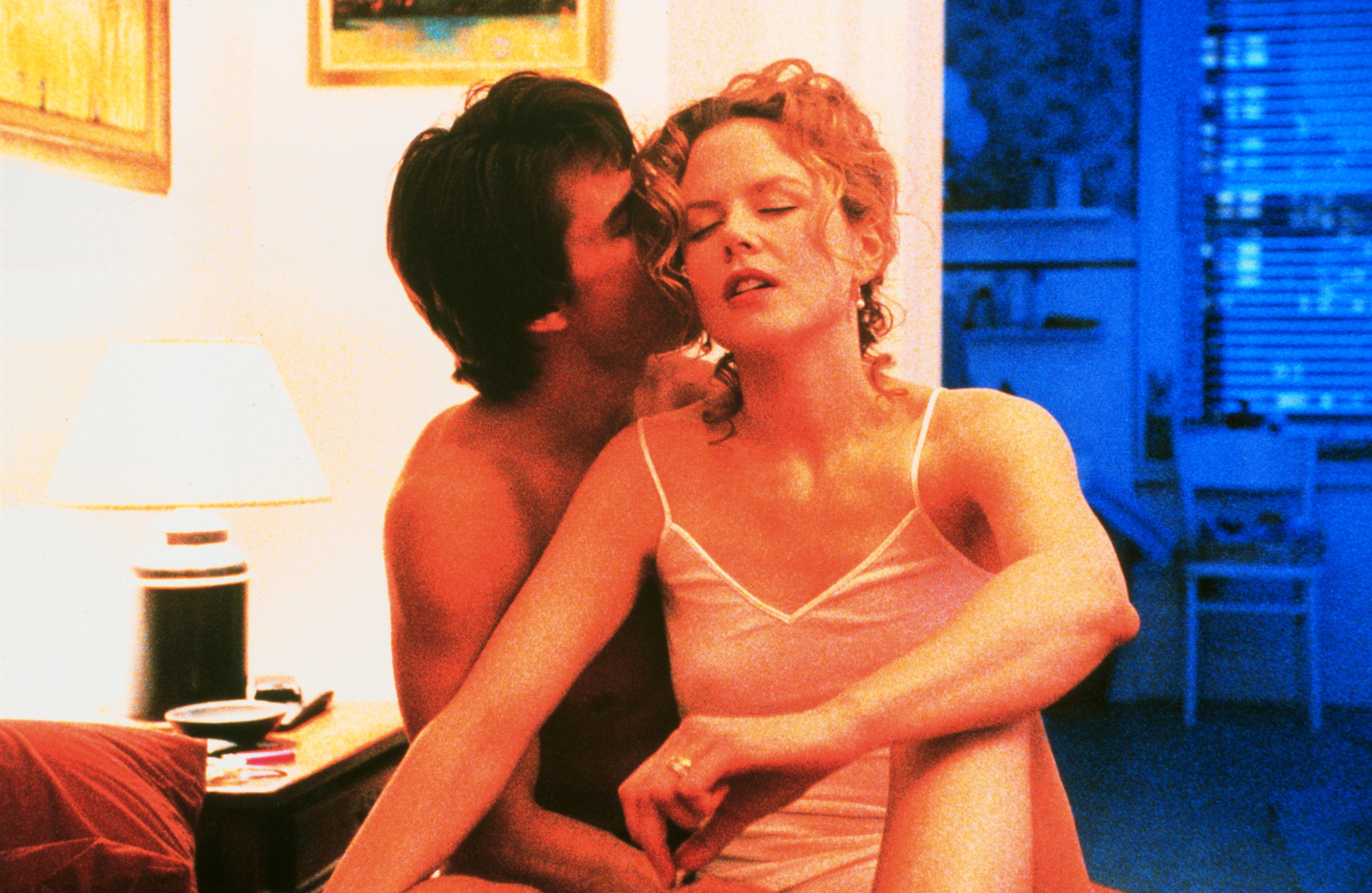
Introduction: “You’re only as good as your last picture” is an adage familiar to Hollywood, but it didn’t necessarily apply when Stanley Kubrick’s “Eyes Wide Shut” premiered on July 16, 1999. Arriving four months after his death, the controversial film eluded audiences, divided critics and challenged movie historians to rank it among the director’s greatest work. On the 15th anniversary of its release, here’s a look at the final films of twelve celebrated auteurs.
Click HERE for the article.
Variety: 7 Crazy ‘Planet of the Apes’ Moments You Won’t Believe

Introduction: When a film franchise lasts for more than four decades, it’s bound to collect a few odd moments along the way, and the “Planet of the Apes” series is no exception. As the eighth film in the popular saga arrives in theaters July 11, here’s a look at some of the strangest riffs on simian cinema.
Click HERE for the article.
The Geffen Playhouse’s ‘Wait Until Dark’: A Theater Review
 The Geffen Playhouse’s revival of Frederick Knott’s classic thriller “Wait Until Dark” is a whole lotta fun.
The first act is a bit creaky, showing its age in a few places, while highlighting Alison Pill’s fine lead performance. The 1940s setting, changed from the mid-60s for this new production, appears to have freed the actress from the overly mannered tics she often exhibits on screen. I thought she seemed surprisingly at home in the period, capturing Susie’s plucky spirit without relying on self-conscious gimmicks or quirky bits of business. Aside from her role on HBO’s “In Treatment,” this might be the most natural I’ve seen her.
Mather Zickel is dependably solid as Mike, making it easy to believe that he could gain the trust of a vulnerable woman in over her head. His square-jawed charm helps sell the character as a professional con man, and as the story progresses he exhibits a welcome air of desperation. Plus, his final dive down the stairs is nicely gruesome.
Adam Stein as Roat wasn’t working for me at first, but by the exciting second act he was totally in the psychopathic groove and I appreciated what he was going for. Early on, he seemed to be channeling John Waters for some weird reason. But once the lights went out, he was a maniac to be reckoned with. His knife-wielding stage leap elicited a few genuine screams throughout the audience.
On a technical level, the apartment set felt nicely lived-in (loved the rain falling outside the windows), the lighting effects were beautiful (particularly during the climactic refrigerator gag), the sound design was subtle yet intriguing (an eerie low hum emanates whenever the tension builds) and the fight choreography was impressively brutal. In fact, during the curtain call, when the stage lights went up, I was pleased to see just how much blood was actually covering Pill’s face and dress.
“Wait Until Dark” was well worth the wait.
Lisa Unger’s ‘In the Blood’: A Book Review
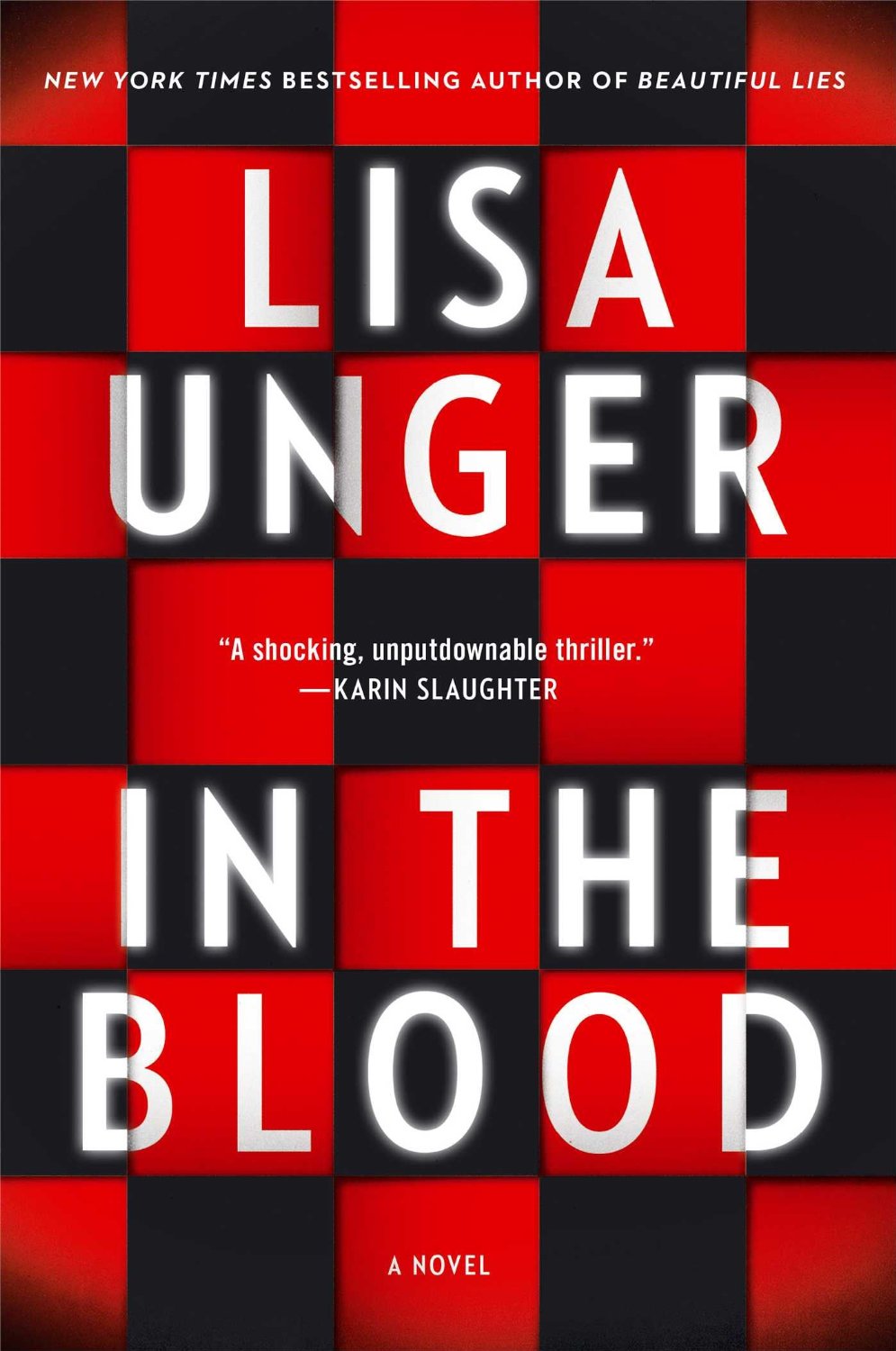 The best thing about Lisa Unger’s thriller “In the Blood” is the ominous mood it occasionally captures. An icy dread prevails at key moments throughout the story, making this a book best read on a cold winter’s night.
Unfortunately, the novel’s first-person narrator is a whiner, prone to asking herself plot-centric questions over and over again, to the point that it becomes silly. Here’s a short paragraph to illustrate her annoying habit:
“I got dressed swiftly and walked into the living area. What did he mean, time was running out? What had he seen that night? Who had he told? Did he know where Beck was?”
She does that throughout the entire book. I put up with her constant self-pity (the character describes herself as a “misery magnet”), but the way she kept posing questions that the reader should be asking got old really fast.
The mystery plot was okay, but never truly grabbed me. Unger sets up all kinds of nicely creepy elements (a bloody trauma hidden in the past, a series of missing girls on a secluded college campus, a weird little sociopathic boy, an eerie scavenger hunt, a hidden journal…), but there’s not a lot of forward momentum to the narrative.
I wish there was more of a ‘ticking clock’ aspect to the missing person case that fuels the main story. A greater sense of urgency might have helped quicken the reader’s pulse. Instead, events happen at an almost leisurely pace. Part of the problem might be that the missing girl isn’t much of a character. We barely know anything about her, and what little we do know doesn’t particularly warm us to her.
On the plus side, the creepy little boy is a lot of fun in a “Bad Seed” kind of way, and some of the darker elements found in the journal entries interspersed throughout the novel are intriguing. At its best, the book recalls the classic Italian Giallo films from the 60s and 70s. The prologue contains echoes of Dario Argento’s “Deep Red,” and the campus setting reminded me of Massimo Dallamano’s 1972 shocker “What Have You Done to Solange?”
There are two or three semi-decent twists towards the end of the story, but none were all that thrilling. Ultimately, the whole thing felt a bit too safe and somewhat hokey to me. For a novel with the word ‘Blood’ in the title, it could have used a bit more of the stuff.
Lee Grant’s ‘I Said Yes to Everything’: A Book Review
 If, like me, you spent the 1970s glued to ‘The ABC Sunday Night Movie,’ then the name Lee Grant probably conjures up images of all-star casts, international intrigue, and blockbuster drama.
From Neil Simon’s “Plaza Suite” to “Voyage of the Damned” to “Airport ’77,” Grant appeared alongside the biggest names in Hollywood, in some of the best films ever made.
For a period of time, you couldn’t turn on a television without hearing broadcast announcer Joel Crager’s baritone voice reciting a who’s-who list of movie stars, ending with the familiar refrain “…and Lee Grant starring in…”
This explains why Grant’s new autobiography “I Said Yes to Everything” is a book I’ve been waiting years for her to write.
Beginning with dreamy childhood memories and ending with a celebratory Christmas dinner in 2013, Grant takes us through her life’s arc with all the passion and candor that one could hope for. There’s an artfulness to her prose, a sense of adventure and revelation in the way she structures the tale. Not one to run from a fight or hold her tongue, Grant writes with a clarity and self-deprecating honesty that’s rare these days. From boldly confessing her deepest fears, weaknesses, and vanity, to exposing embarrassing moments like the time she visibly got her period on stage during an opening night performance – and kept right on acting – this is the memoir of an artist with nothing left to hide.
The fact that she does it all with a ribald sense of humor and razor-sharp intelligence makes it that much sweeter.
There’s a vibrant, sensuous quality to the early chapters set in 1930s New York and France. Grant writes with a child’s eye for detail, painting the sights and sounds of the Bronx and Paris with a heightened intensity that’s impossible to resist. We wince at the vicious anti-Semitism she suffers as the daughter of Jewish/Polish parents, and experience her fumblingly awkward sexual awakenings amid the subways and tenement houses of NYC.
Around this time, we witness the birth of an Academy Award winning actress. From the moment she’s chosen at random while walking across the stage at the Metropolitan Opera House on her way to a children’s ballet class, to her years studying alongside Sanford Meisner and teaching at the famed Actors Studio, Grant takes us step-by-step through her development as a performer.
For fans like me, it’s thrilling stuff.
The twelve years she spent on the Hollywood blacklist forms the most fascinating section of the book. Married to a communist playwright at the time, Grant’s fearless commitment to social justice and her outspoken support of accused fellow artists landed her on the House Committee on Un-American Activities (HUAC) watch list. Just as her career was skyrocketing, offers for film and television roles dried up overnight. The Kafkaesque events that followed eventually destroyed her marriage and threatened her sanity.
And yet, as righteously angry you’d expect her to be, Grant’s story never bogs down in bitterness or blame. The person we find within these pages is far too practical and grounded for that. Although the toll that Joe McCarthy and Roy Cohen exacted was enormous, Grant outlasted her political enemies and reclaimed her career through sheer determination. It’s truly inspiring.
And then there are the larger-than-life personalities she encounters along the way; from a brooding, mercurial Marlon Brando, to a desperate, haunted Lenny Bruce. Grant spills juicy details about illicit romances with Burt Bacharach and Warren Beatty, and sheds sad light on Melvin Douglas and Grace Kelly, both of whom seem lost and tragic by the time she meets them. Best of all are the outrageous stories she tells about the incomparable Shelley Winters. The two actresses worked together on “The Balcony,” and Winter’s narcissistic bullying instantly clashed with Grant’s professionalism. Their uncomfortable rivalry eventually exploded during promotion for the film at the Playboy Club in New York. I won’t soon forget the image of Lee Grant literally chasing Shelley Winters across the grotto screaming “Cunt!” at the top of her lungs.
The final chapters of the book document Grant’s transition from in front of the camera to behind it. At a certain point, the lack of good roles, coupled with a crippling fear of forgetting her lines, forced the actress to reevaluate her career. An article in the news about a group of women on strike against a bank in Minnesota inspired her to document their plight, which is how she added award winning documentarian and filmmaker to her list of credits.
Covering almost 90 years in the rollercoaster life of a gifted artist, “I Said Yes to Everything” is exactly the book I’d hoped it would be. Near the end, Grant hints that there might be a few more stories for a second memoir.
We should be so lucky!
Disney’s ‘Saving Mr. Banks’: A Film Review
 “Saving Mr. Banks” is a well-produced bore about a singularly unpleasant person.
Understand this: I love movies about assholes. Noah Baumbach’s “Greenberg” is one of my favorite films, and I consider Neil LaBute’s “Your Friends and Neighbors” to be a caustic masterpiece. But spending two dullish hours in the company of Mary Poppins’ noxious creator was almost more than I could handle.
Watching it, I was reminded of Roger Ebert’s final line in his review of Brian De Palma’s “Scarface.” He summed up that classic gangster film as “a wonderful portrait of a real louse.”
Well, “Saving Mr. Banks” gets the second half of that quote right.
This is actually two movies crammed into one. The first is set in 1961 and depicts the meeting between author P. L. Travers and filmmaker Walt Disney during pre-production for the adaptation of her beloved novel. The second storyline deals with Travers’ difficult childhood in dusty Australia. These sepia-toned flashbacks are so cliché-ridden, so lacking in honest emotion, so transparently manipulative, they make the animatronic Lincoln robot in Disneyland’s ‘Hall of Presidents’ seem like Daniel Day-Lewis.
Most of the blame lies with a script that mistakes hoary old chestnuts for psychological depth. Colin Farrell does what he can with the stereotypical ‘drunk dad’ role, but everything about the character is so overtly telegraphed it’s an uphill battle. The moment he coughs into a handkerchief, you just know it’s going to come away stained with blood.
Casting is problematic as well. The child-actress who plays the young P. L. Travers is simply not up to the task of portraying a complex human being at this stage in her career. She mostly just stands there, backlit, looking golden and angelic as the sun catches her curly hair just right. She’s little more than a prop, a semi-realistic doll that occasionally mumbles a corny line or two. Perhaps the filmmakers should’ve cut these sequences down to just a few fleeting images, instead of filling the movie with them.
The Disney half of the picture works better, but never quite catches fire. My main qualm is how repetitive it is. When we first meet Emma Thompson as Travers she’s complaining about selling her book to Hollywood. Two hours later, she’s still bitching about it.
The movie just keeps covering the same ground over and over again. While there’s some undeniable fun to be had in watching the birth of a classic like Disney’s “Mary Poppins,” the real-life Travers comes across as uniquely unsuitable for biopic treatment. She’s a one-note figure, almost exactly the same at the end of the story as she was at the beginning. Basically, she’s like Dustin Hoffman’s Rain Man… but not as lovable.
I guess we’re supposed to find her constant insults and cruel remarks “witty.” Instead, I just thought she was a bitter, humorless, nasty piece of work. There’s a pettiness to Travers that no amount of mildewed flashbacks can explain.
Tom Hanks lays on the folksy drawl pretty thick as the creator of Mickey Mouse. Personally, I had trouble believing that his Walt Disney could order his own lunch from the studio commissary, let alone run an empire.
I was surprised at what a small-scale movie this was. Most of the Australian sequences take place in a single drab farmhouse, while the bulk of the Disney scenes are set in one small rehearsal room. The whole thing felt oddly claustrophobic after about an hour.
I’m not exactly sure who the target audience for this is. Certainly not children, as I imagine they’d be bored to tears by it. And I have trouble picturing the modern teen who’d find it enthralling. Maybe it’ll resonate with adults who grew up loving the Poppins book and film, but I doubt it.
My advice for them would be to stick with the originals.
Peter Berg’s ‘Lone Survivor’: A Film Review
 I admire Peter Berg’s “Lone Survivor” on a technical level, and respect the courage and prowess of the real-life soldiers upon whom this true story is based. However, the film’s near-complete lack of characterization, coupled with its torture-porn brutality, made it an endurance test to sit through.
And that’s probably what Berg had in mind.
Like Ridley Scott’s “Black Hawk Down,” this is an ultra-realistic combat simulation that drops the viewer directly in the line of enemy fire. There’s a ‘caught-in-the-crossfire’ intensity to the violence that never lets up once the first bullet leaves its chamber.
Shattered bones are rendered in extreme close-up and shrapnel wounds are documented in near-clinical detail. We’re talking state-of-the-art carnage, created by cinematic craftsmen of undeniable skill.
It’s too bad then that we never learn much about the four main characters who suffer the worst of it. The most I could glean from the film’s brief pre-combat opening is that two of them apparently have wives and fiancés waiting for them back home. Apart from their facial hair preferences, that’s about as in-depth as they get.
Having starred in the war film “A Midnight Clear” (1992) and directed “The Kingdom” (2007) – not to mention the amusingly goofy “Battleship” (2012) – it’s obvious that Peter Berg has a deep admiration for the extraordinary sacrifices soldiers make. So it’s doubly-hard to figure out why he’d invest so little humanity in the main characters, while lavishing enormous effort to show how painfully they died. It’s clear that he wants to honor them with this movie, but I don’t understand how stripping them down to bearded mannequins in a gory shooting gallery accomplishes that. Once they come under attack, we may as well be watching videogame avatars.
The movie’s centerpiece battle lasts a full hour. I wish Berg had carved fifteen minutes from it and added them to the opening section of the film.
Where did these men grow up? Why did they join the military? Do they truly believe in what they’re fighting for? What plans do they have once their mission is over? “Lone Survivor” doesn’t bother to ask those questions, let alone answer them. Instead, we’re treated to a semi-standard ‘Band of Brothers’ philosophy and little else. I don’t know why the producers cast actors like Mark Wahlberg and Emile Hirsch and then gave them nothing to play. These are purely physical performances, the kind that could have been accomplished by any number of charismatic stuntmen.
If we learn very little about the movie’s heroes, we’re given even less info about the Afghanis in the film. In many ways, this is an old-school war movie, the kind that paints every non-American in strictly black and white terms. Some are “good guys,” most are “bad guys,” and we can tell exactly who’s who by how much they scowl. I could overlook this shallowness if even one of the “bad guys” was the slightest bit memorable. But here they’re virtually interchangeable. Investing one of them with a smidgeon of personality might have made the climax seem a bit more exciting. As it stands, the finale is the film’s weakest sequence.
Another problem is that there’s almost no context to the heroes’ mission. We’re told that they’re supposed to identify a high ranking Taliban bigwig, but then what? There’s no larger scope to their task, and very little seems at stake if they fail to complete it. Without a greater sense of risk, or some kind of global urgency, they might as well be a bunch of heavily armed backpackers who got lost behind enemy lines.
The film opens with real-life documentary footage of young recruits training in boot camp, and I have to confess, this felt more than a little exploitative to me, especially once the high-velocity, high-gore action sequences began a short while later. I’m just not sure that “Lone Survivor” is serious enough to warrant its inclusion.
And finally there are the photos of deceased soldiers shown during the end credits. Whoever decided to score this heartbreaking montage with Peter Gabriel croaking out a dirge-like version of David Bowie’s “Heroes” should have picked another song. It’s borderline ghastly.
I’m glad I saw “Lone Survivor,” but I doubt I’ll be seeing it a second time.
Nick Cutter’s ‘The Troop’: A Book Review
 Nick Cutter’s “The Troop” is advertised on its front cover as a “Novel of Terror,” but it’s more like a high-class gore book.
That’s not meant as an insult.
Similarly, the back cover describes it as “28 Days Later” meets “Lord of the Flies,” when it’s actually closer to “Cabin Fever” meets “Bushwhacked.” Again, I’m not putting it down, mainly because… well… I couldn’t put the damn thing down. It’s well paced, tightly written and keeps you turning pages long into the night.
Although not as revolting as Ed Lee’s “The Bighead,” Bryan Smith’s “Depraved” or Wrath James White’s “Succulent Prey” (because it, mercifully, lacks sexual violence), “The Troop” might be the most gleefully grotesque novel that Simon & Schuster has ever published.
Admittedly, there were times when I felt that the gore slowed the story down a bit. I mean, I love movies like Lucio Fulci’s “The New York Ripper” and novels like Richard Laymon’s “Flesh” as much as the next guy, but when “The Troop” paused for three solid pages to depict the graphic slaughter of a sea turtle in agonizing detail… well the book just stopped dead in its tracks. Cutter was clearly making a serious point about the difficulty of killing something that wants so badly to live (mainly because he repeated that point twice in no uncertain terms), but did the turtle scene really have to drag on for so long? Was there no other way to introduce that concept?
The same holds true for a flashback sequence involving the torture of a kitten. The story just screeches to a halt while the graphic details pile up. Moments like these (and there are several others involving self-mutilation and bodily disintegration) might help to distinguish “The Troop” from the mainstream horror pack, but they do so at the expense of narrative momentum.
Aside from those few scenes, however, this is a very fun book. It’s an energetic, over-the-top monster story about five kids trapped on an island while being menaced by killer tapeworms. What’s not to like about that? It’s got a pitch-black sense of humor and a plethora of wonderfully sick images scattered throughout its pages.
I just wish that it had a touch more originality. Scott Smith’s similarly themed novel “The Ruins” had a unique, dreamlike quality that this book lacks. “The Troop” never quite transcends its enjoyable B-movie logline the way that Colson Whitehead’s brilliant zombie novel “Zone One” does. Nor is it interested in subtext or social satire like Chase Novak’s recent pregnancy horror novel “Breed.”
And yet I had a total blast reading it. Highly recommended for horror fans with strong stomachs.
Dario Argento’s ‘Dracula 3D’: A Film Review
 Dario Argento’s “Dracula 3D” isn’t the complete fiasco that virtually every single person who’s seen it is claiming it to be.
Sure, long stretches of it are mind-numbingly boring. Sure, the actor who plays Count D is possibly the least charismatic bloodsucker in the history of cinema. And yeah, a good portion of it is shot so flatly that it’s impossible to detect any 3-D whatsoever.
But every so often there appears on screen something so magically weird, so batshit crazy, so jaw-droppingly “huh?” that I couldn’t help but forgive the film its myriad flaws.
For instance, there’s an eye-popping moment when Dracula transforms himself into a 9 FOOT TALL BRIGHT GREEN PRAYING MANTIS. Top that, Bram Stoker! Plus, it’s got enough old-school gore and gratuitous full-frontal nudity to keep you from falling asleep during the dull bits.
Oh, and Dracula also turns into one of those CGI owls from “Legend of the Guardians: The Owls of Ga’Hoole” at one point.
Best of all, there’s Rutger Hauer as a near-catatonic Professor Van Helsing, pounding giant wooden stakes through vampire chests without using a hammer. His hands are so painfully bloated that he simply whacks ’em with his palms! Seriously, I hope they had a team of doctors on set, because Hauer looked like he was one single malt scotch away from full cardiac arrest.
Factor in a few random axe murders, some guy getting his head split in half by a shovel blade, Renfield portrayed as a hulking mongoloid and a non-stop theremin score borrowed from a Simpson’s “Tree House of Horror” episode and you’ve got an unexpected winner, in my humble opinion.
 Matthew Chernov