Home » 2014 (Page 2)
Yearly Archives: 2014
Variety: ‘The Shawshank Redemption’ at 20: How It Went From Bomb to Beloved

Introduction: When it premiered on September 23, 1994, “The Shawshank Redemption” barely registered at the box office. The prison drama opened at No. 9, below the odious sex comedy “Exit to Eden” and just above Robert Redford’s “Quiz Show,” already in its fifth week. Though nominated for seven Academy Awards, the film failed to connect with audiences and vanished from theaters with little fanfare. And then, slowly but surely, its fortunes began to change. On its 20th anniversary, here’s how “The Shawshank Redemption” beat the odds and became a beloved classic.
Click HERE for the article.
Variety: 7 Reasons Why “No Good Deed” Could Be a Late-Summer Sleeper
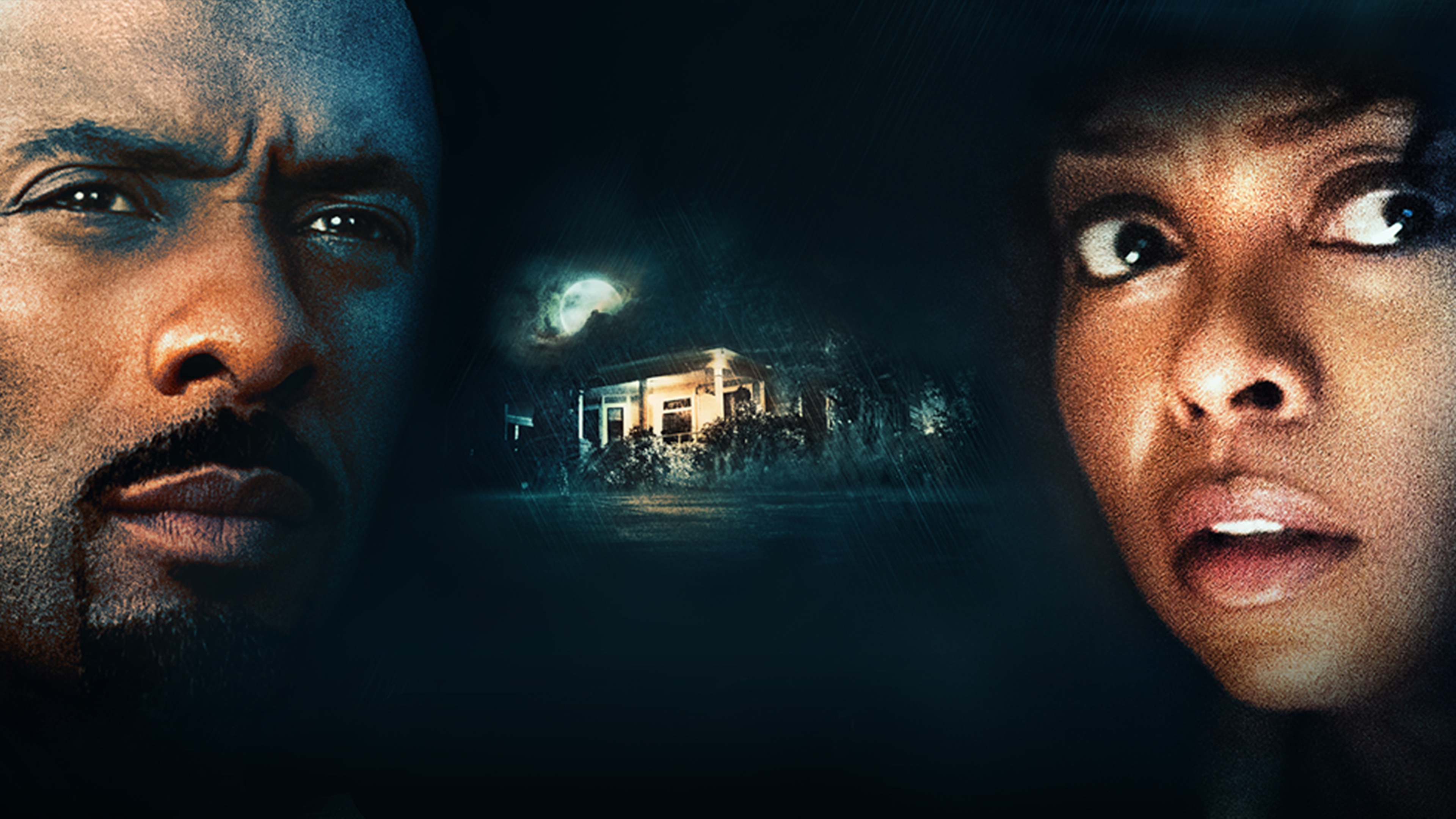
Introduction: In a summer dominated by ape warriors, transforming robots and wisecracking space raccoons, it’s difficult for low-budget non-effects-driven films to make a dent at the box office. And yet Screen Gems’ upcoming thriller “No Good Deed” hopes to accomplish just that. Arriving at the tail-end of the season, this story of a mother defending her home against an escaped convict includes a number of elements that could distinguish it from the pack. Invading theaters on September 12, here’s why “No Good Deed” could be a very late summer sleeper.
Click HERE for the article.
Variety: Badass Grandpas: ‘The Expendables 3′ and 12 More Seasoned Stars

Introduction: When Bette Davis coined the phrase “Old age is no place for sissies,” she may as well have been describing the plot of “The Expendables 3.” Written by and starring Sylvester Stallone, the ensemble film features a cast of mature action vets who aren’t about to trade in their bullets for bifocals just yet. As the third entry in the popular franchise explodes into theaters on August 15, here’s a look at 12 films starring some of the toughest seniors in cinema.
Click HERE for the article.
“The Killing: Uncommon Denominator”: A Book Review
 After 14 years and multiple spinoffs, chances are you’ve seen an episode of the TV franchise “CSI” at least once in your life. Perhaps you watch “Bones” on a semi-regular basis. Or maybe you prefer “Criminal Minds,” or “Castle,” or “Burn Notice.”
But have you read them?
Browse Amazon’s digital shelves and you’ll find original books inspired by popular television series like “Revenge,” “24,” “Veronica Mars,” “Supernatural,” “Grimm” and more.
These aren’t novelizations of existing episodes. They’re new works, written by established authors, that deepen the characters’ backstories, add to the program’s overarching universe and keep viewers hooked during those long hiatus months. And while some might scoff without ever having read one, these tie-ins can be every bit as gripping as any other work of genre fiction.
With that in mind, I urge fans of “The Killing” to pick up a copy of Karen Dionne’s recently released novel “The Killing: Uncommon Denominator.” More than just a solid prequel to the series, it’s an atmospheric, impressively-hardboiled thriller in its own right.
Based on a Danish police drama called “Forbrydelsen” (or “The Crime”), the Americanized version premiered on AMC a few years ago and just wrapped up its fourth, and supposedly final, season on Netflix.
Since the show’s two main characters, Linden and Holder, are introduced to each other in the first season, one of the pleasures of the book is seeing how close they repeatedly come to crossing paths. There’s a witty “Rosencrantz and Guildenstern” aspect to the tale, a playful gamesmanship to the way that Dionne continually toys with what we already know about the series and its characters.
The book can easily be enjoyed without having seen an episode, but for longtime viewers it’s a far richer experience. There’s a chilling moment late in the novel where Linden, while searching an eerily deserted house, hears a child crying softly behind a closet door. For a split-second she freezes, remembering another child who hid behind a similar door in the past, a child whose trauma formed a major subplot in the show’s disturbing third season. An earlier sequence finds Linden out of her jurisdiction at an Indian casino, where she receives a bitter cold-shoulder from the security staff and management. Astute viewers know that the casino is destined to become an important location during the Rosie Larsen murder case from the first season.
Fans of the series are in for some wonderful shivers of recognition throughout the story.
Set in Seattle, but shot in Canada, “The Killing” was one of the frostiest shows in recent memory, and Dionne expertly captures its frigid, rain-soaked landscape with a cinematographer’s eye for detail. This is a bleak, cold book, filled with gray skies, torrential downpours and cops huddled inside cars to keep warm. In one particularly evocative scene, you can practically smell the icy breath of the junkies gathered around a trash-fire beneath an overpass, with undercover officer Holder secretly among them.
Dionne’s prose style, especially during the first few chapters, is clipped and terse, cutting directly to the point. There’s a “just-the-facts-ma’am” vibe to her writing, a lean Joe Friday-esque directness that works nicely within the world of the show. It’s punchy stuff.
Like the TV series, the book is structured in 24-hour blocks of time, with each section marking another day of the investigation. What’s unique is the way that Dionne alternates between her three main characters: Linden, Holder and a new Detective named John Goddard. This is due to the fact that, in order to maintain continuity with the program, Linden and Holder can’t be allowed to meet in person. Dionne carefully plots the novel to keep them apart, using Goddard as a go-between when necessary. It’s a technique that works well, thanks in large part to Goddard himself.
A warmer, more easily relatable character than either Linden or Holder, Goddard is a welcome addition to the series. It’s interesting to see the way that he views the other two detectives, particularly Linden whom he partners with when their individual investigations merge. We sense that although he respects her skills as a cop, he doesn’t entirely trust her judgment in other areas. Considering how emotionally damaged she is, that’s probably wise.
Holder takes a slight backseat role, but when he’s the focus of attention it’s easy to imagine Joel Kinnaman’s twitchy performance. There’s a quiet sadness to Holder that Dionne clearly understands, a lost quality that makes us root for him, whether onscreen or on the page.
The book’s version of Linden is every bit as flawed as the one portrayed so hauntingly by actress Mireille Enos. From her constant chain smoking, to her awful mothering, to her control-freak need to always drive, Dionne paints Linden as a walking-wounded survivor of the foster care system. There’s a heartbreaking sequence in the novel where Linden returns to the lonely child placement agency that she was once a part of. Entering the building, she’s both fearful and curious, a tightly-wound cop coming face-to-face with her past. Dionne allows us to glimpse that inner conflict and the result is quite moving.
As for the actual murder case that propels the story, it’s decent, but not amazing. Unlike the grisly, sexualized murder of Rosie Larsen in the first two seasons, or the creepy serial killings in the third, the deaths in the book lack a sense of palpable horror. Perhaps that’s because the victims are middle-aged men, killed for financial reasons, not vulnerable teens and street kids being stalked by psychos. I must admit, I missed the nightmarish quality of those earlier crimes.
Another area where the show trumps the book is in its use of well-drawn supporting roles. There were times when the novel felt slightly under-populated. The TV series spent a great deal of time with important side-characters, like the grief-stricken Larsen family, Darren Richmond and his campaign staff, Bullet and her fellow runaways and especially death row inmate Ray Seward and the prison staff. They helped flesh-out the narrative, adding layers of depth that the novel sometimes lacks.
Overall though, “The Killing: Uncommon Denominator” (admittedly not the greatest title in the world), is an engrossing crime novel and an excellent prequel to the television series. I suspect it’ll please fans who aren’t ready to say goodbye quite yet to Linden and Holder. Speaking as one of them, I hope that Dionne writes another book in the series… and another one after that.
May the killing continue.
Variety: Best Movie Animals: Teenage Mutant Ninja Turtles & 11 More Ass-Kicking Critters

Introduction: From the moment that a Border Collie named Jean wandered onto a silent film studio in 1908 and became the world’s first four-legged movie star, Hollywood’s love affair with animals was set in motion. But with the advent of CGI, today’s beastly actors are more apt to pick up a machine gun and lead an assault than snuggle on their masters’ laps. Case in point: the nunchuck-wielding Teenage Mutant Ninja Turtles. As the fifth entry in the TMNT franchise blasts into theaters, here are 12 of the most ass-kicking critters in recent cinema.
Click HERE for the article.
Variety: ‘Purple Rain’ at 30: Why It’s the Musical That Defined the ’80s

Introduction: When it premiered on July 27, 1984, the rock drama “Purple Rain” announced the arrival of a major movie star in Prince Rogers Nelson, a flamboyant 26-year-old musician better known by the royal mononym Prince. Already a multi-platinum recording artist, Prince’s feature debut grossed a whopping $70 million in the U.S., while its Grammy winning soundtrack spent six consecutive months atop the Billboard charts. On the 30th anniversary of its release, here’s why “Purple Rain” remains the crowning musical film of our time.
Click HERE for the article.
Variety: ‘Eyes Wide Shut’ Anniversary: The Final Films of 12 Directors
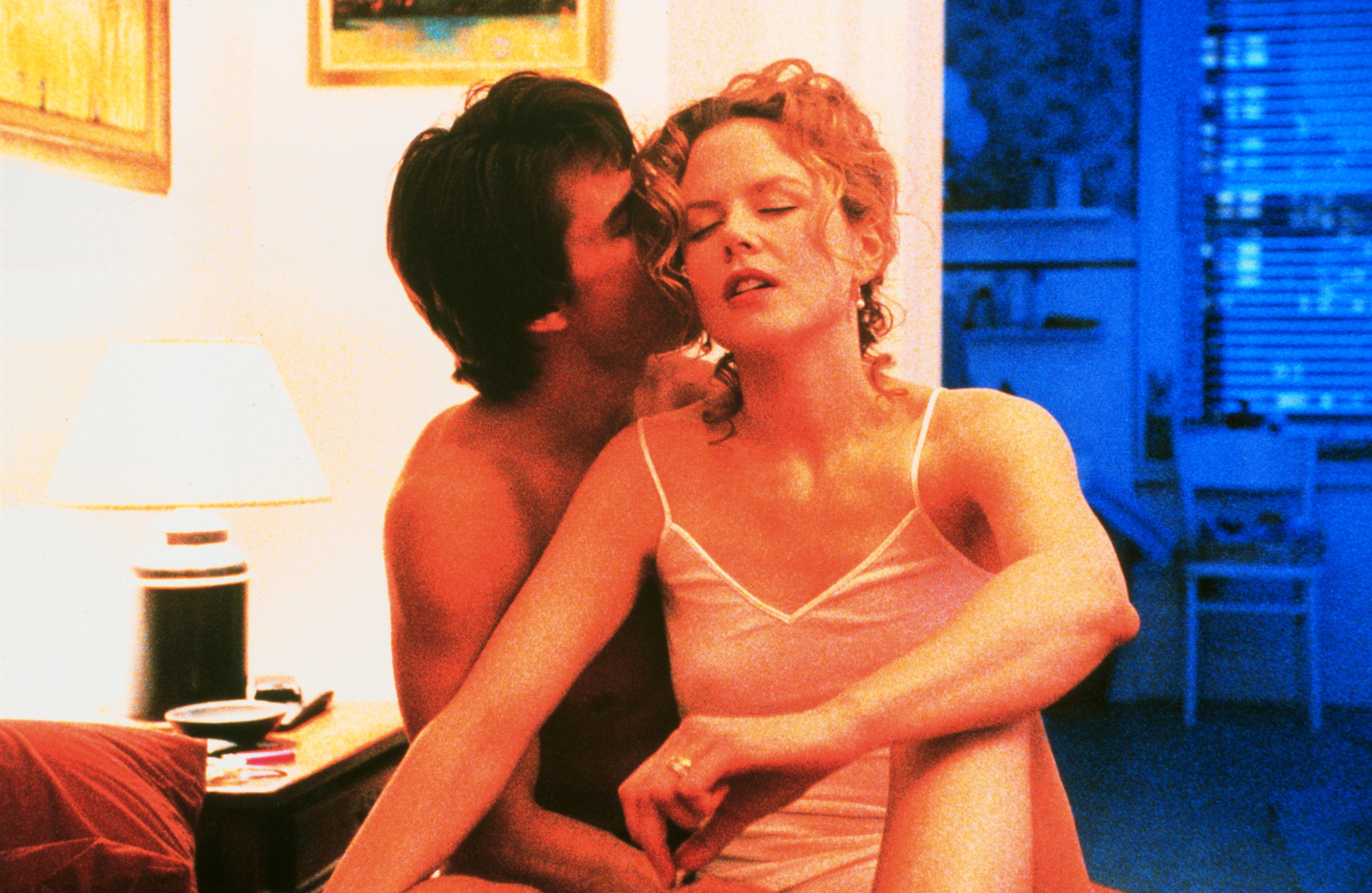
Introduction: “You’re only as good as your last picture” is an adage familiar to Hollywood, but it didn’t necessarily apply when Stanley Kubrick’s “Eyes Wide Shut” premiered on July 16, 1999. Arriving four months after his death, the controversial film eluded audiences, divided critics and challenged movie historians to rank it among the director’s greatest work. On the 15th anniversary of its release, here’s a look at the final films of twelve celebrated auteurs.
Click HERE for the article.
Variety: 7 Crazy ‘Planet of the Apes’ Moments You Won’t Believe

Introduction: When a film franchise lasts for more than four decades, it’s bound to collect a few odd moments along the way, and the “Planet of the Apes” series is no exception. As the eighth film in the popular saga arrives in theaters July 11, here’s a look at some of the strangest riffs on simian cinema.
Click HERE for the article.
The Geffen Playhouse’s ‘Wait Until Dark’: A Theater Review
 The Geffen Playhouse’s revival of Frederick Knott’s classic thriller “Wait Until Dark” is a whole lotta fun.
The first act is a bit creaky, showing its age in a few places, while highlighting Alison Pill’s fine lead performance. The 1940s setting, changed from the mid-60s for this new production, appears to have freed the actress from the overly mannered tics she often exhibits on screen. I thought she seemed surprisingly at home in the period, capturing Susie’s plucky spirit without relying on self-conscious gimmicks or quirky bits of business. Aside from her role on HBO’s “In Treatment,” this might be the most natural I’ve seen her.
Mather Zickel is dependably solid as Mike, making it easy to believe that he could gain the trust of a vulnerable woman in over her head. His square-jawed charm helps sell the character as a professional con man, and as the story progresses he exhibits a welcome air of desperation. Plus, his final dive down the stairs is nicely gruesome.
Adam Stein as Roat wasn’t working for me at first, but by the exciting second act he was totally in the psychopathic groove and I appreciated what he was going for. Early on, he seemed to be channeling John Waters for some weird reason. But once the lights went out, he was a maniac to be reckoned with. His knife-wielding stage leap elicited a few genuine screams throughout the audience.
On a technical level, the apartment set felt nicely lived-in (loved the rain falling outside the windows), the lighting effects were beautiful (particularly during the climactic refrigerator gag), the sound design was subtle yet intriguing (an eerie low hum emanates whenever the tension builds) and the fight choreography was impressively brutal. In fact, during the curtain call, when the stage lights went up, I was pleased to see just how much blood was actually covering Pill’s face and dress.
“Wait Until Dark” was well worth the wait.
Lisa Unger’s ‘In the Blood’: A Book Review
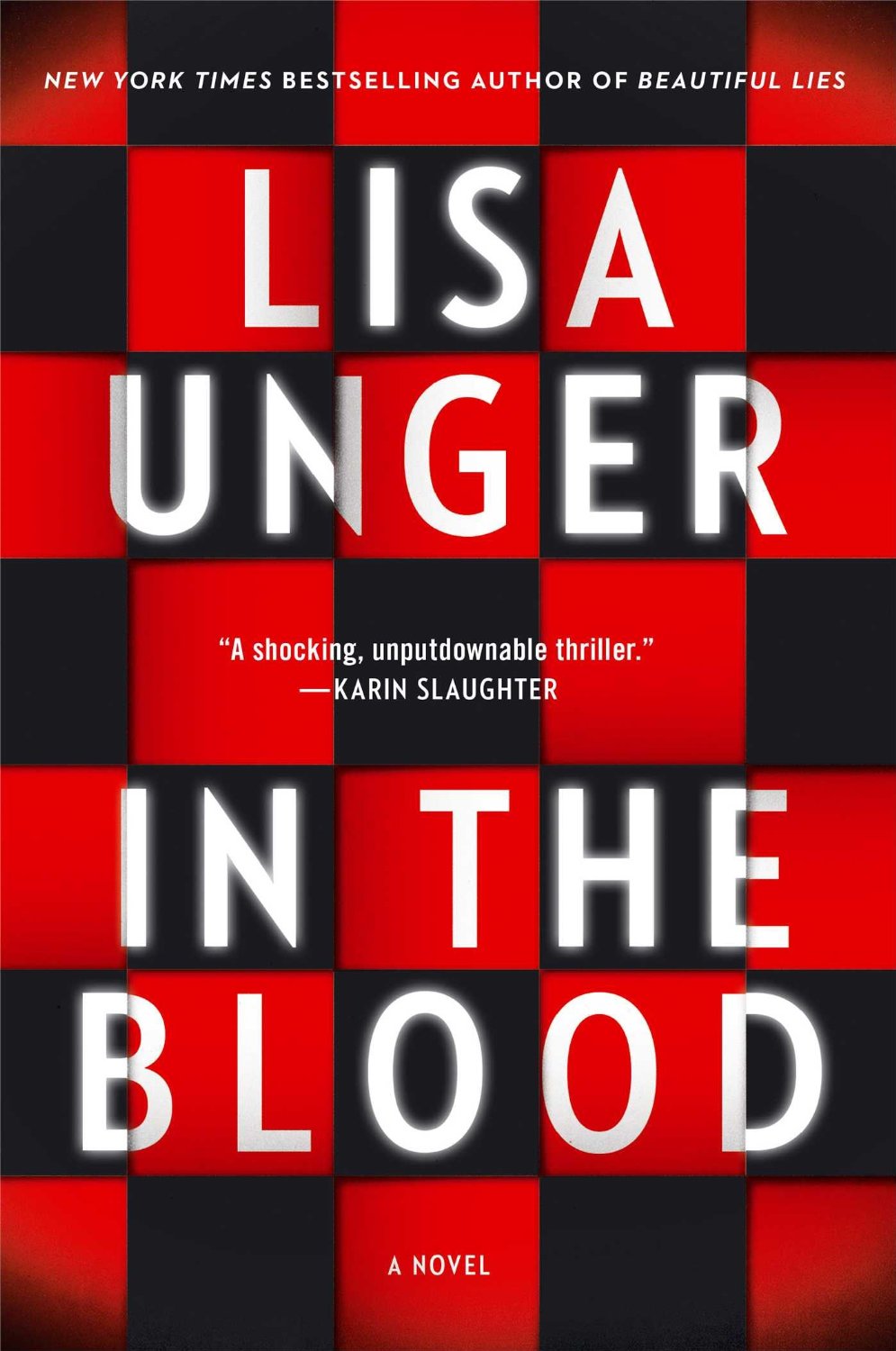 The best thing about Lisa Unger’s thriller “In the Blood” is the ominous mood it occasionally captures. An icy dread prevails at key moments throughout the story, making this a book best read on a cold winter’s night.
Unfortunately, the novel’s first-person narrator is a whiner, prone to asking herself plot-centric questions over and over again, to the point that it becomes silly. Here’s a short paragraph to illustrate her annoying habit:
“I got dressed swiftly and walked into the living area. What did he mean, time was running out? What had he seen that night? Who had he told? Did he know where Beck was?”
She does that throughout the entire book. I put up with her constant self-pity (the character describes herself as a “misery magnet”), but the way she kept posing questions that the reader should be asking got old really fast.
The mystery plot was okay, but never truly grabbed me. Unger sets up all kinds of nicely creepy elements (a bloody trauma hidden in the past, a series of missing girls on a secluded college campus, a weird little sociopathic boy, an eerie scavenger hunt, a hidden journal…), but there’s not a lot of forward momentum to the narrative.
I wish there was more of a ‘ticking clock’ aspect to the missing person case that fuels the main story. A greater sense of urgency might have helped quicken the reader’s pulse. Instead, events happen at an almost leisurely pace. Part of the problem might be that the missing girl isn’t much of a character. We barely know anything about her, and what little we do know doesn’t particularly warm us to her.
On the plus side, the creepy little boy is a lot of fun in a “Bad Seed” kind of way, and some of the darker elements found in the journal entries interspersed throughout the novel are intriguing. At its best, the book recalls the classic Italian Giallo films from the 60s and 70s. The prologue contains echoes of Dario Argento’s “Deep Red,” and the campus setting reminded me of Massimo Dallamano’s 1972 shocker “What Have You Done to Solange?”
There are two or three semi-decent twists towards the end of the story, but none were all that thrilling. Ultimately, the whole thing felt a bit too safe and somewhat hokey to me. For a novel with the word ‘Blood’ in the title, it could have used a bit more of the stuff.
 Matthew Chernov